



What is label literacy, and why does it matter?
Imagine this.
You’re standing in a pet store aisle, surrounded by colourful packets of dog treats promising shiny coats, strong teeth, and wagging tails. You pick up a packet that looks promising. The front says “premium meat treats”. You flip the pack over for the dreaded task: reading ingredients on the dog treat label.
As you’re reading the pet treat label, you see the phrase: “meat derivatives”.
You pause.
What exactly does that mean?
Is it chicken? Lamb? Something else entirely? And why isn’t the ingredient more clearly named?
Many pet parents experience this exact moment of confusion when reading pet treat labels. Labels are filled with technical terms, vague descriptions, and marketing phrases that sound impressive but reveal very little.
While the love we Indians have for our pets is unmistakable, the lack of regulatory bodies for pet food in India makes it a hotbed of confusing labels. Research has shown that the market for pet food in India is inundated with misleading marketing terms. But navigating through labels is a crucial part of taking care of our pets.
Reading pet treat labels carefully ensures that the treats you give your dog are nutritious, safe, and genuinely beneficial, rather than simply well-packaged.
Because when it comes to dog treats, the real story isn’t on the front of the packet.
It’s on the back.
Reading pet treat labels: The first step to good dog health!
Good treats may seem like a small indulgence, but they play a significant role in a dog’s diet. Many pet parents use treats for training, bonding, or simply rewarding good behaviour. Over time, however, these little rewards can add up nutritionally.
According to the Food Safety and Standards Authority of India, consumers should always examine ingredient lists, nutritional information, and manufacturing details when reading pet treat labels. While these guidelines are primarily designed for human food, the same principles apply strongly to a pet food label.
A well-written label provides several important clues about a product:
- What ingredients are actually present
- The nutritional composition of the treat
- Where and how the product was manufactured
In India, pet nutrition experts often emphasise that ingredient transparency is one of the most reliable indicators of product quality.
When labels are clear, specific, and informative, pet parents can make better decisions. When labels rely heavily on vague or marketing-heavy language, it becomes harder to determine what the treat truly contains.
Think of the act of reading pet food labels as the first health check for any product you are about to feed your dog.
Your dog might not be able to read the label.
But they are certainly relying on you too.
What to look for in a pet food label?
“What’s in a name?”, you might ask. The better question is, what’s in the label? Here are the top 3 essentials to look for when reading pet treat labels.
1. Clearly named protein sources
A good label clearly specifies the source of protein. Instead of vague terms like meat derivatives or animal protein, you should ideally see ingredients such as:
- Chicken
- Lamb
- Fish
- Duck
Transparent ingredient naming indicates that the manufacturer is clearly disclosing what the product contains.
Indian pet nutrition platforms such as Pet India Online highlight that named protein sources help pet parents understand exactly what they are feeding their pets, particularly if the dog has allergies or dietary sensitivities.
If the protein source is clearly stated, it becomes much easier to assess the quality of the treat.
2. A short, simple ingredient list
When it comes to dog treats, simplicity is often a good sign.
Treats that contain fewer recognisable ingredients are usually easier to evaluate and less likely to contain unnecessary additives. When reading a pet treat label, look for simple and easy-to-understand labels.
Pet education platforms such as Heads Up For Tails often advise pet parents to prefer treats where the ingredient list contains straightforward components, such as:
- Real meat or fish
- Vegetables or grains
- Natural preservatives
A long list filled with unfamiliar chemical names may indicate that the product relies heavily on additives rather than whole ingredients.
If the ingredient list reads like a chemistry exam, it might be time to put the packet back on the shelf.
3. Manufacturing and expiry information
A reliable label should always clearly display:
- Manufacturing date
- Expiry date
- Storage instructions
- Manufacturer details
Freshness matters for pet treats just as much as it does for human food. Proper storage information also helps ensure that the product remains safe and nutritious after opening.
If a label lacks clear manufacturing or expiry information, that alone is a reason to reconsider the purchase. Look out for this information with a keen eye when reading any pet treat label.
What to avoid
Just as important as knowing what to look for is recognising what should raise a red flag.
Here are three things pet parents should be cautious about when reading pet treat labels.
1. Vague ingredient terms
Terms such as:
- Meat derivatives
- Animal by-products
- Poultry meal (without specifying the source)
These can make it difficult to determine the true quality of the ingredients used.
Clear naming usually signals higher transparency.
2. Artificial colours and excessive additives
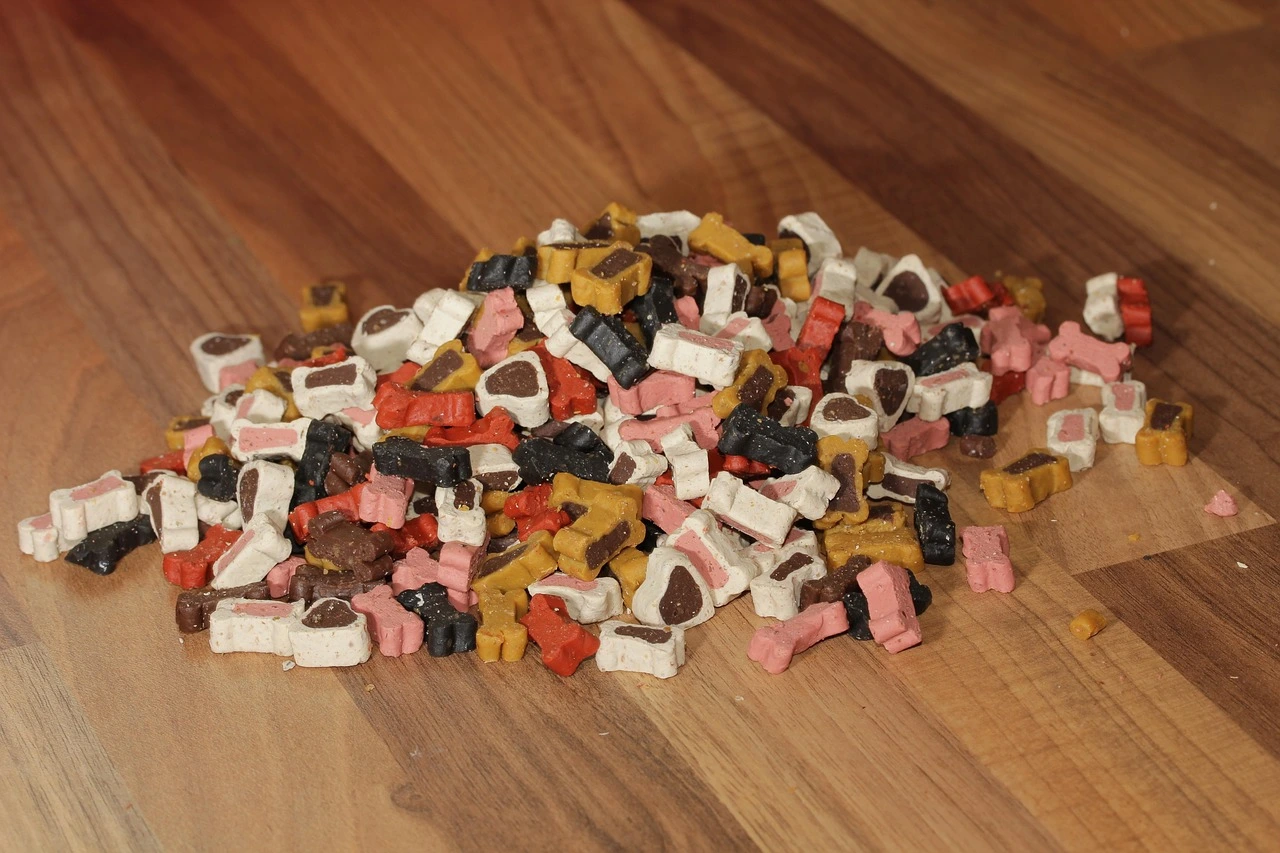
Some treats include artificial colours or flavour enhancers designed primarily to appeal to the buyer rather than the dog.
Dogs, after all, are far less concerned about whether their snack is bright red or neon green.
These additives may not always provide any nutritional benefit.
3. Marketing buzzwords without explanation
Words like:
- “Premium”
- “Gourmet”
- “Natural”
Sounds impressive – but these words often lack strict regulatory definitions in the Indian pet food market.
A flashy label doesn’t necessarily guarantee a high-quality treat. The real information will always be in the ingredient list and nutritional details: parse through the excess while reading the pet treat label.
Paws and Reflect
At the end of the day, choosing a dog treat isn’t just about picking the most attractive packet on the shelf.
It’s about understanding what that packet is actually telling you.
Label literacy empowers pet parents to move beyond marketing slogans and make informed decisions about their dog’s nutrition upon reading pet treat labels. By focusing on clear ingredients, transparent manufacturing details, and avoiding vague terminology, you can ensure that every treat you give your dog contributes positively to their health.
After all, treats are not just snacks.
They’re moments of reward, trust, and connection between you and your dog.
The right treat for your dog is more than a reward or a training tool- it’s a part of your dog’s journey to good health.
